
The healthy, beautiful body that fits into tight jeans and café chairs with armrests is reinforced by the slender mannequins in shop windows. Across social media, in stores, and through commercial campaigns, we are constantly exposed to society’s and the market’s definition of the ideal body.
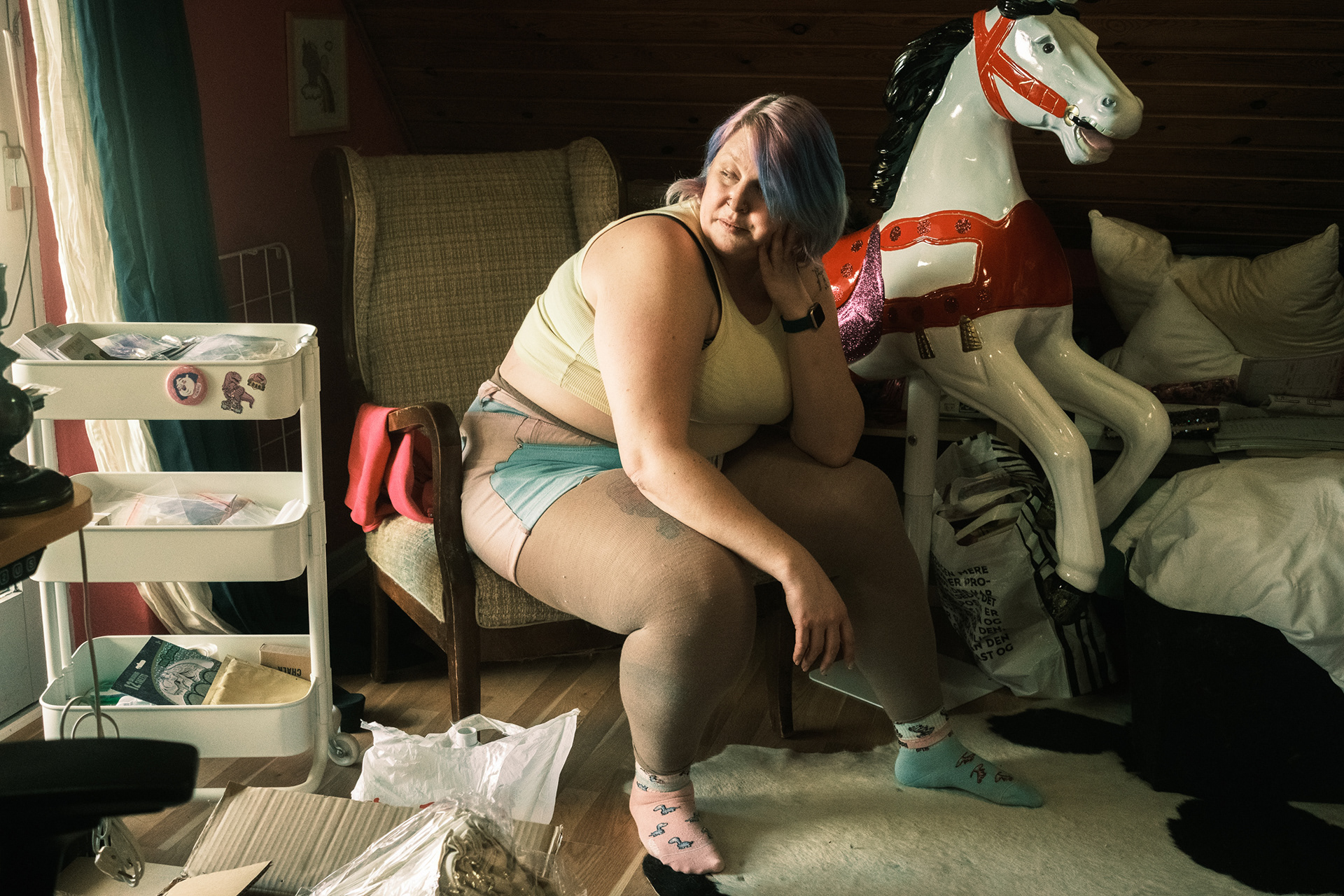
Many people are influenced to pursue a body type whose attainment risks compromising mental health and overall well-being. Meanwhile, body activists like Regina speak out, arguing that the real issue is a lack of acceptance of bodily diversity. That it's not individuals who should have to conform to society’s idea of how we ought to look, but society that must accommodate reality as it is. That we are all different, and that we should be.
“In reality, it’s not so much about self-acceptance as it is about society’s acceptance."

About 20 kilometers southwest of Viborg lies the small village of Sønder Resen. Among its 185 inhabitants is 37-year-old Regina Sirene. Regina is non-binary, agender, anti-capitalist, a feminist, and a critic of power and norms. She is also a fat activist who has devoted her life to challenging a culture of perfection and working to normalize being fat.
“I work with the issue of how fat people are treated so poorly that even thin people end up wasting their lives in fear of becoming fat.”
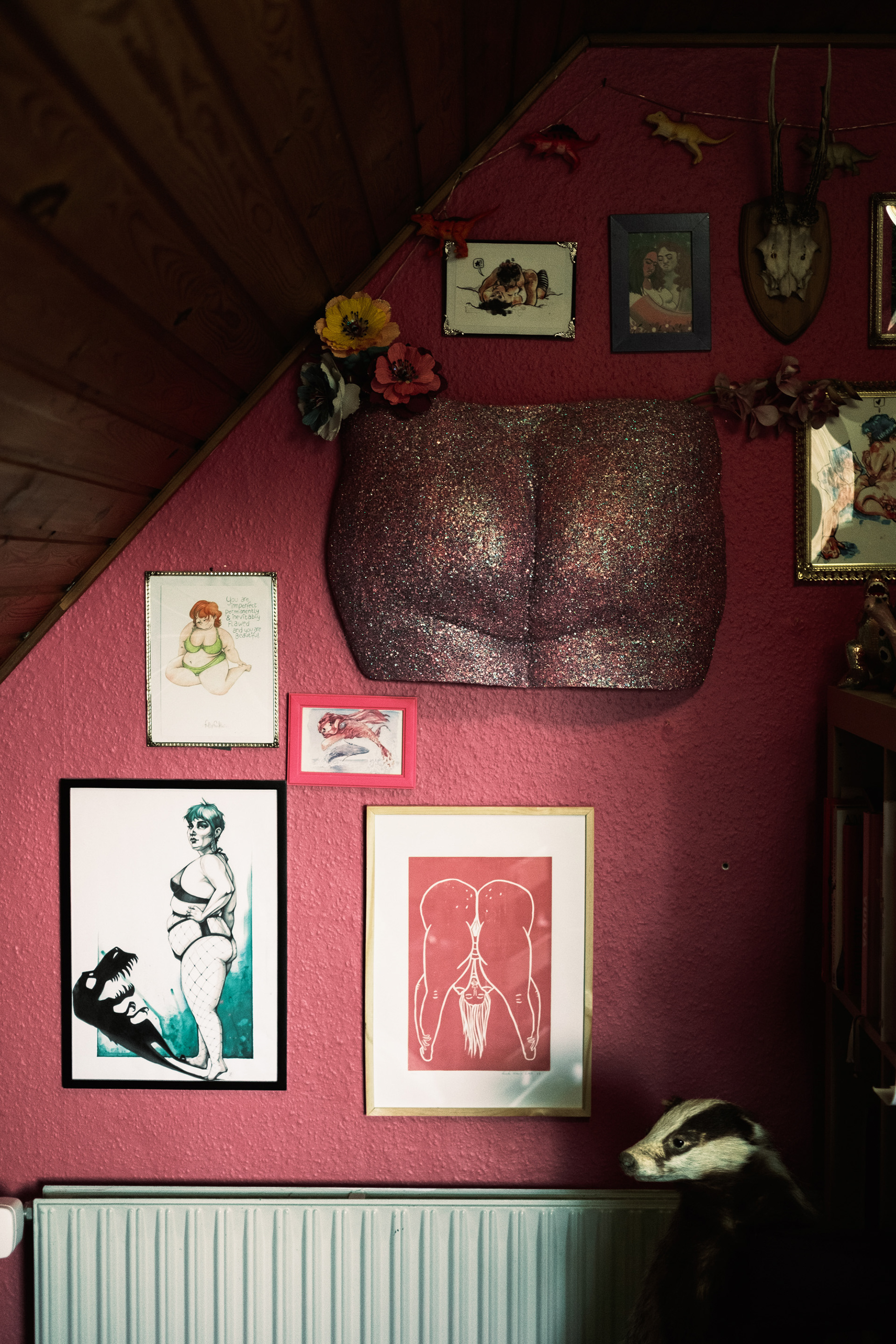
A life-size cast of Regina’s buttocks, covered in glitter, decorates her office wall alongside framed pictures of bodies in various poses.
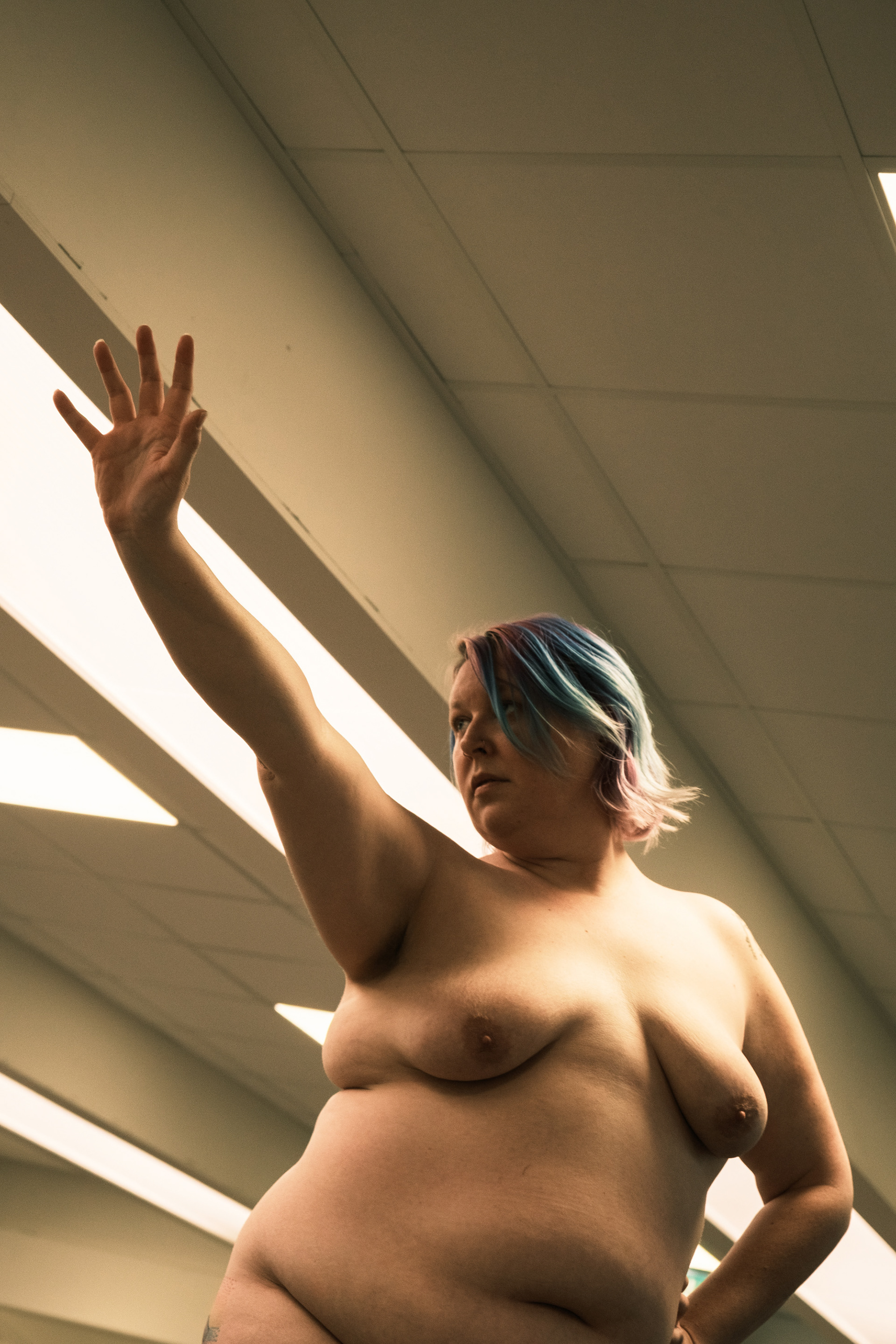
As part of the Muscular Dystrophy Foundation’s Pærfekt campaign, Regina poses nude on stage before a group of students at a business college on February 19, 2025, seeking to challenge the culture of perfection and help normalize all body types.
“What is it in you that makes you so angry when I talk about fat people being treated badly? What is it in you that makes you so angry when you see a fat person and think it’s acceptable to insult them online? What is it in you that makes you, on the one hand, want to discuss how terrible it is that young people are too ashamed of their bodies to shower after gym class—but, on the other hand, insult fat people when they speak up?”

"There’s nothing wrong with my self-acceptance. But that doesn’t mean people stop yelling at me in the street, that clothing stores want to sell me clothes, or that my doctor takes me seriously.
At its core, it’s about the right to a life where you don’t experience discrimination, and where discrimination isn’t so normalized that you have to live in fear of it.
If we keep seeing only thin, beautiful people talking about beauty ideals, we’ll go on believing that this is the only kind of normal — and we’ll go on feeling like there’s something wrong with us.”
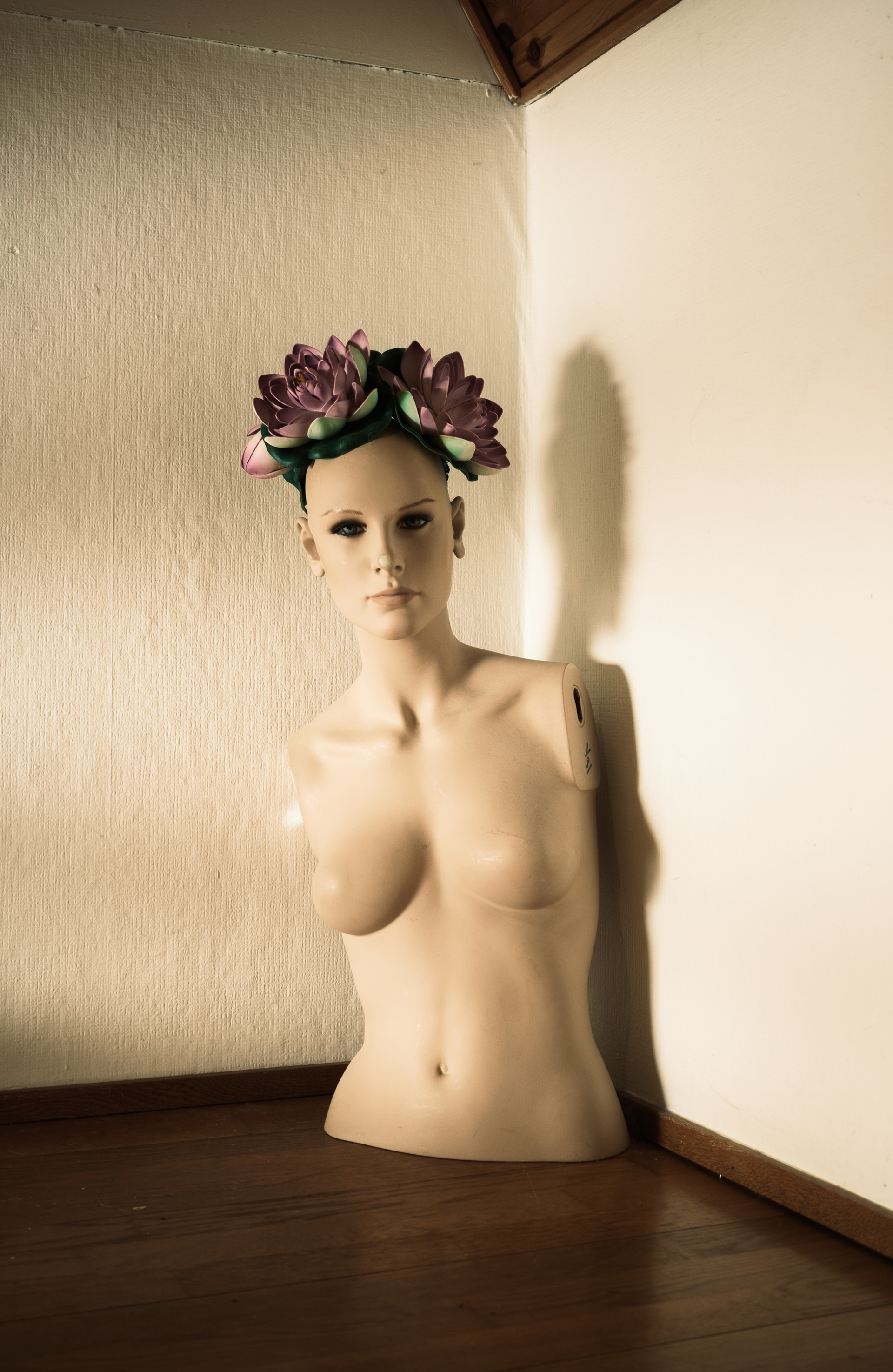
The upper half of a mannequin stands as a sculpture of a slender female torso halfway up the staircase leading to the first floor of the home. The sculpture contrasts sharply with the glitter-covered figures that appear in all sizes throughout the workshop and in Regina’s office. Regina placed the torso as a permanent artwork on the staircase because she thought it looked decorative. Here it stands as a clear symbol that the message is not to condemn slender bodies, but rather to embrace all body types.
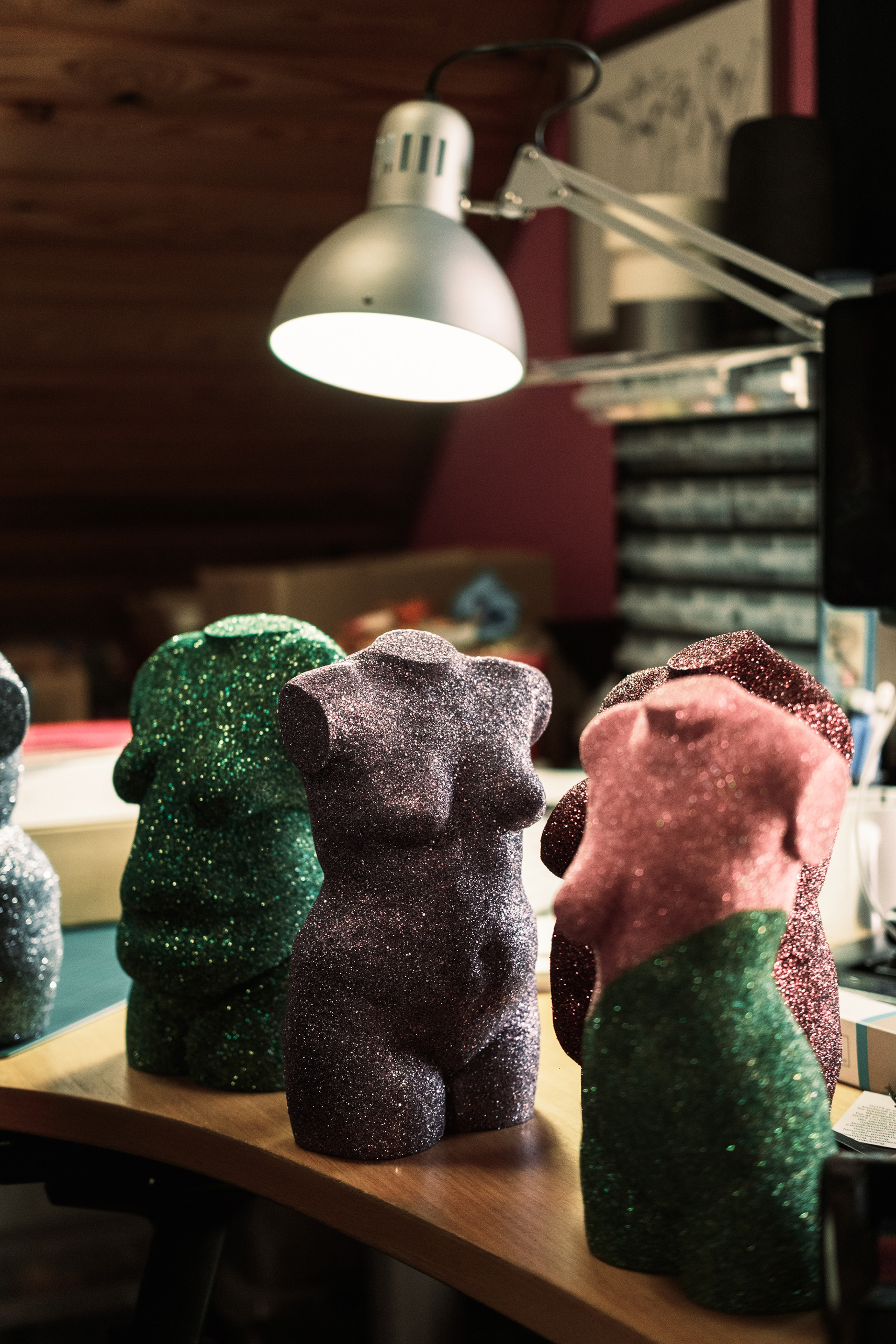
Sculptures and figurines of different female bodies are spread throughout the first floor of the home, which serves as the workshop from which Regina runs her business. Its purpose is to help people develop a healthier and more self-loving view of their own bodies. Through her project Fatbulous Bodies, she visits clients to scan their bodies, which are then 3D-printed into decorative sculptures, earrings, keychains, or something else entirely.
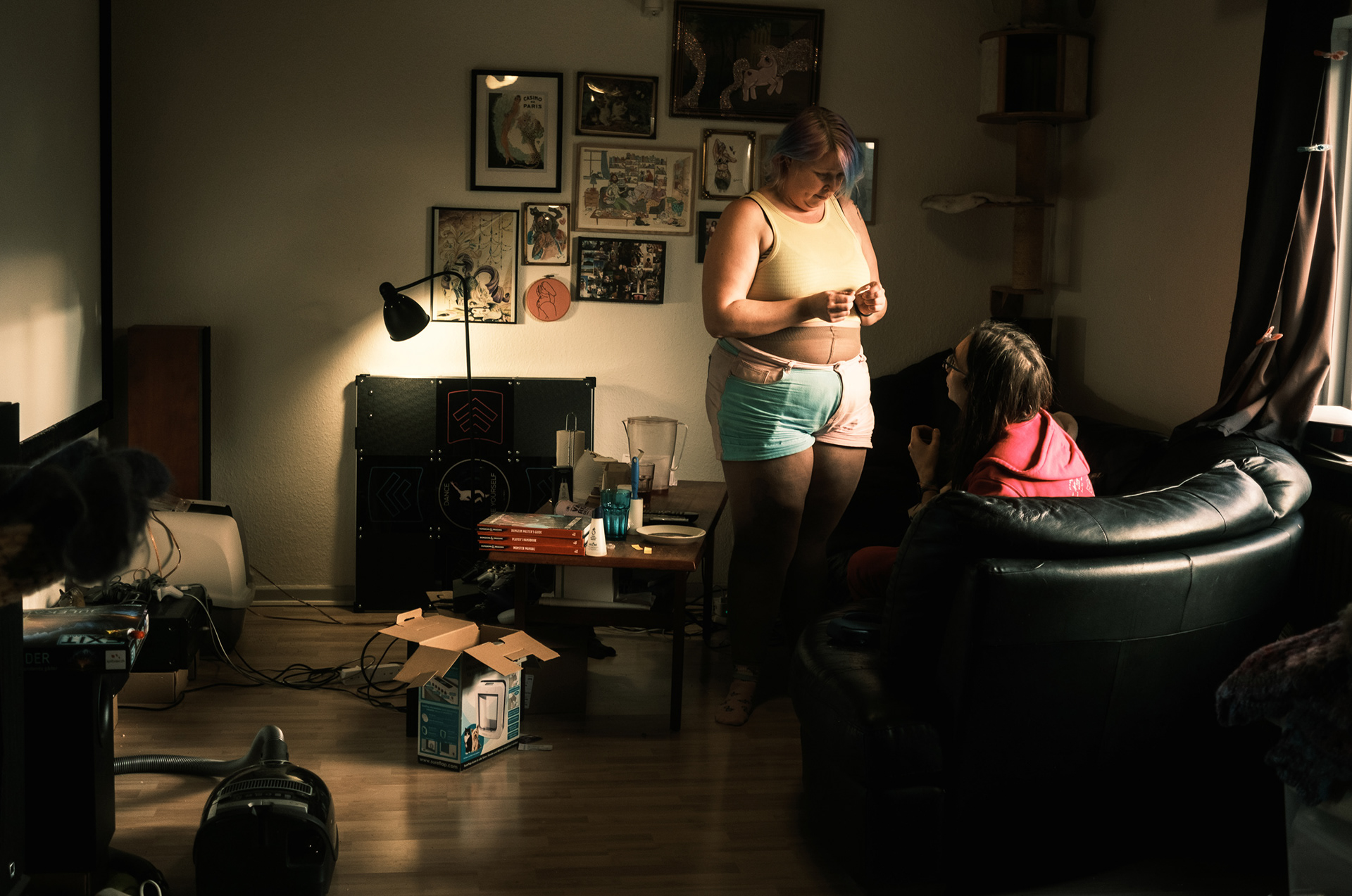
Regina and her partner, Bjarke, in their living room on February 17, 2025. Bjarke supports Regina in her activist work by providing a stable financial foundation that allows her to focus on running her own activist business.
"Why is it always those of you with privileges who get to keep having the conversation? It’s like setting up a debate about racism with a panel made up entirely of white people.”
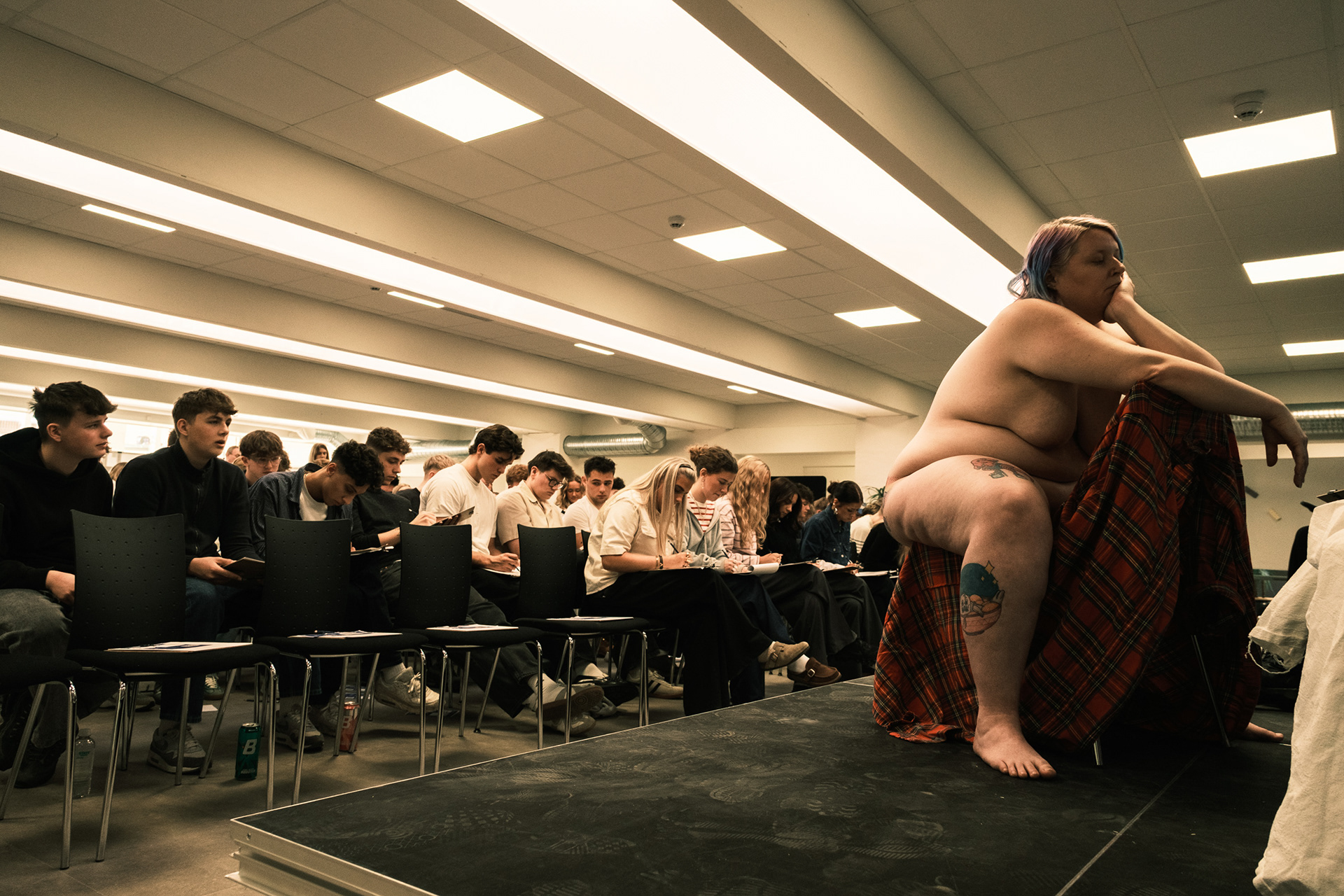
Regina doing her final pose during the Muscular Dystrophy Foundation’s ‘Pærfekt’ campaign at a business college on February 19, 2025. Some of the participating students had to be reprimanded during the event for showing a lack of seriousness and maturity. This was the longest posing round, where Regina chose to sit with her back to the audience.