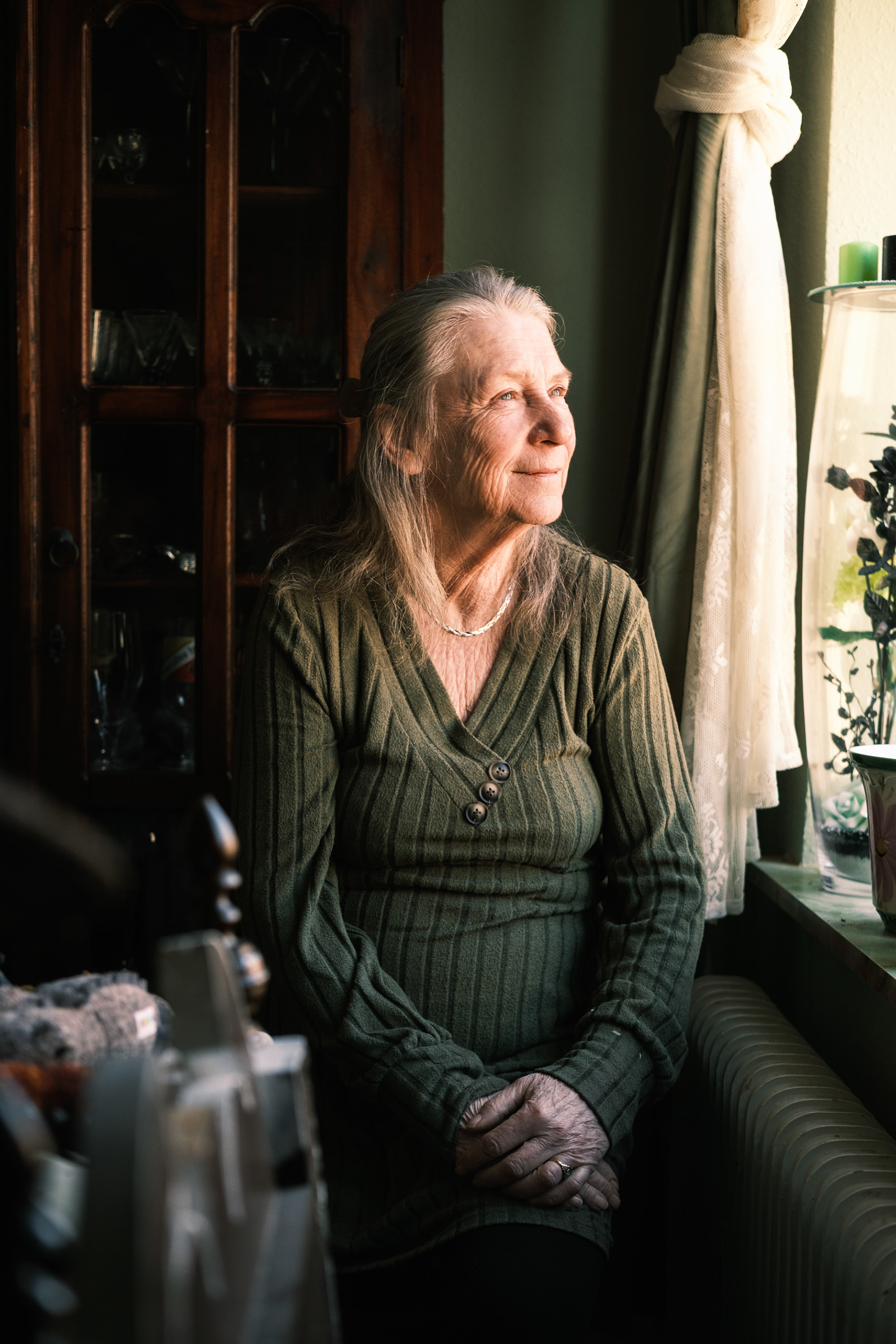
Made in collaboration with journalist Anna Frida D. Andersen
Despite losing her right leg in a work-related accident while working as a groundworks laborer in 2008, Eva now runs her tavern almost single-handedly from her wheelchair. Every morning, seven days a week, she wheels herself to the stairs, grabs the railing, and hops down the narrow stairway on her left leg until she reaches the wheelchair waiting at the bottom.
“You can’t count on anyone to come and save you.”
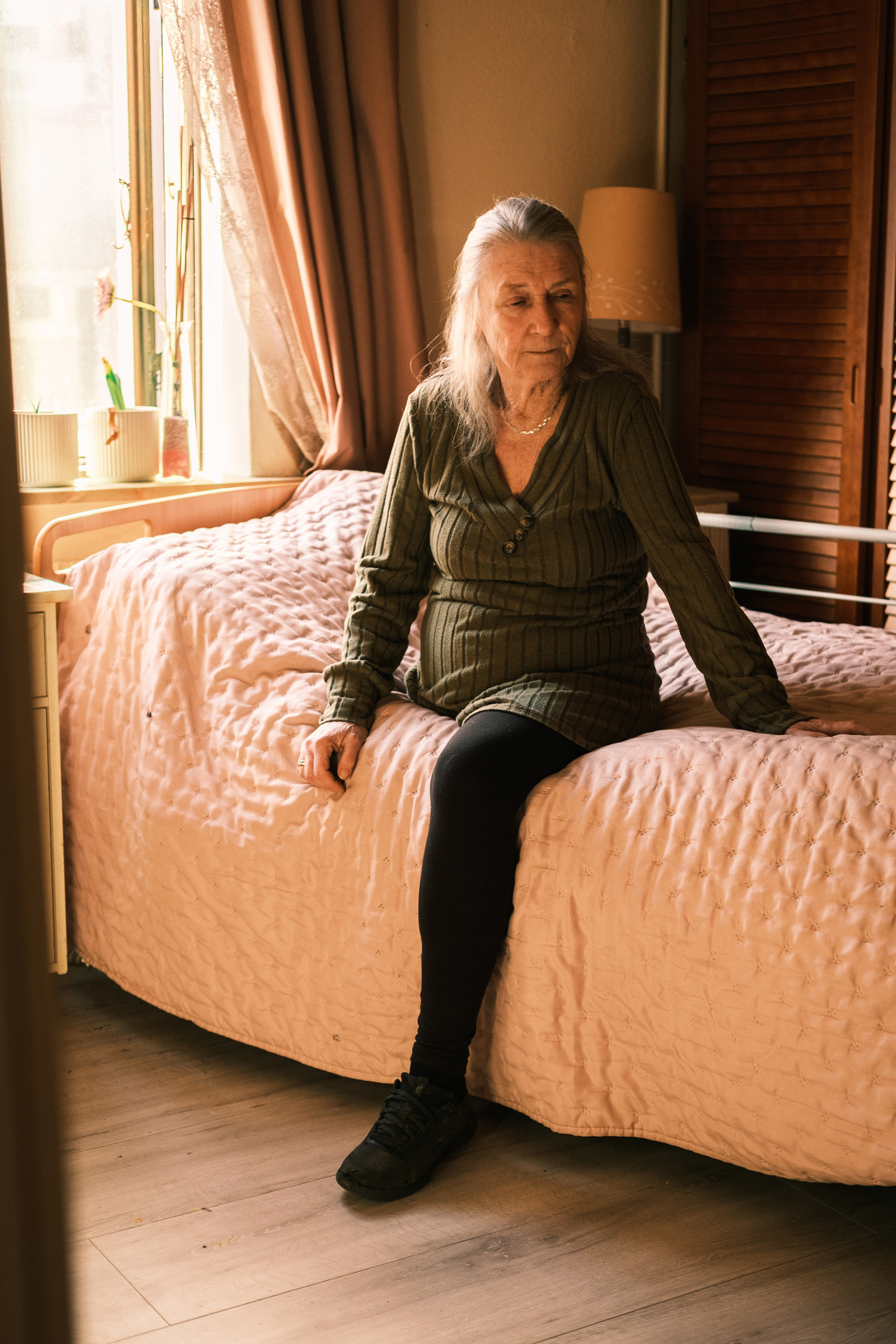
65-year-old Eva Klausen on her bed in her apartment in the early hours, before starting an ordinary 16-hour shift in her tavern downstairs.
Eva Klausen grew up with her parents and two brothers in a small town on the outskirts of Aarhus. When her parents divorced, she moved with her mother to Viby. Because of their poor relationship, Eva was kicked out of the house at the age of 14.
“I didn’t fit in with my family. It was like we couldn’t talk about the same things—like we didn’t speak the same language.”
Her grandmother was the exception.
“She was the most amazing person. If there was one thing that made me jealous, it was that my older brother got to grow up with her. I wish it had been me.”
Years later, Eva painted the walls of her apartment green—just as she remembers them in her grandmother’s home.
In 1999, she fell in love with John, whom she married shortly after. One Wednesday in October 2004, John called to tell her he loved her. Then everything went quiet. Eva found him hanging lifeless from the ceiling in the warehouse next to their tavern.
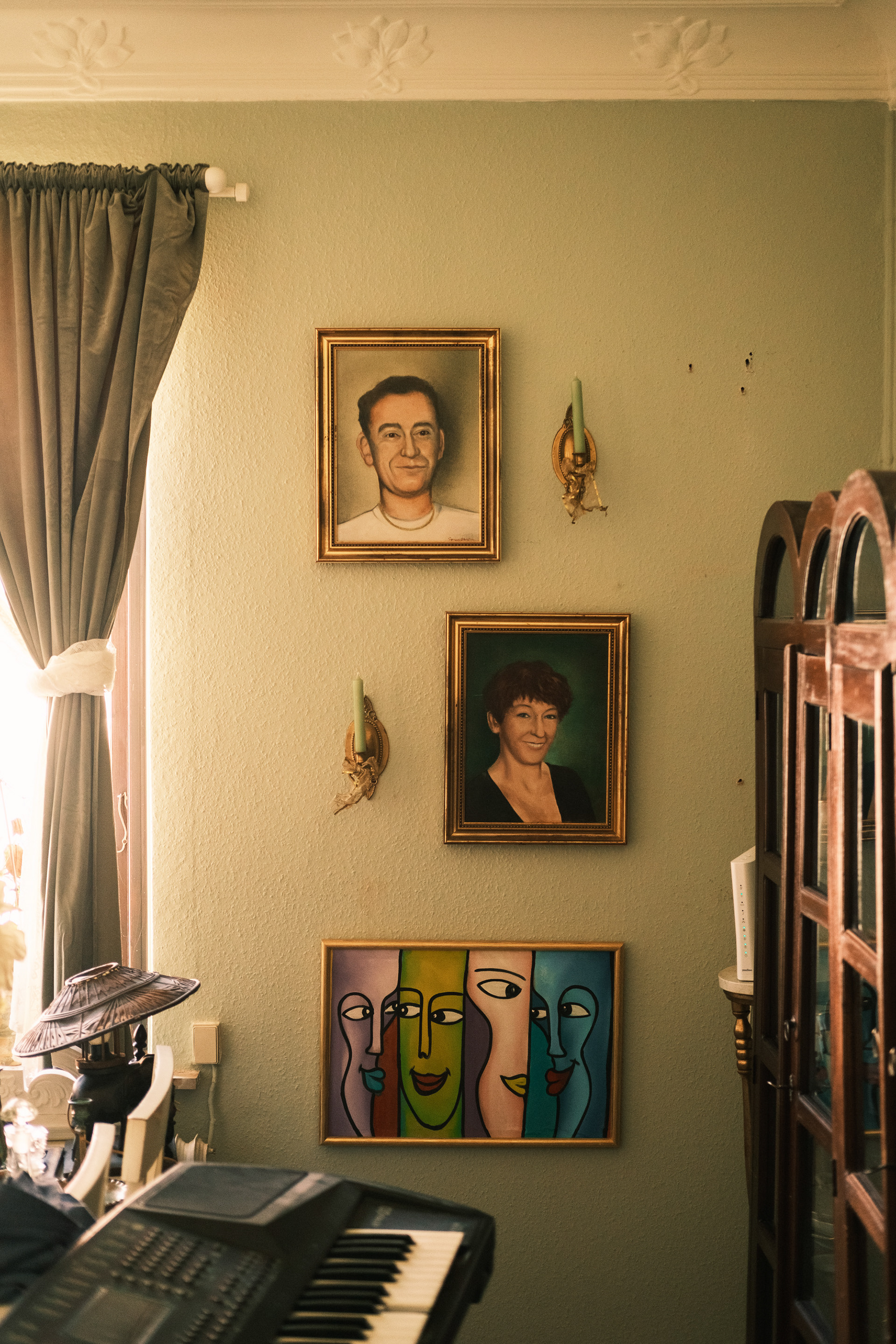
Two paintings of the couple now hang on one of the
walls of Eva’s living room.
walls of Eva’s living room.
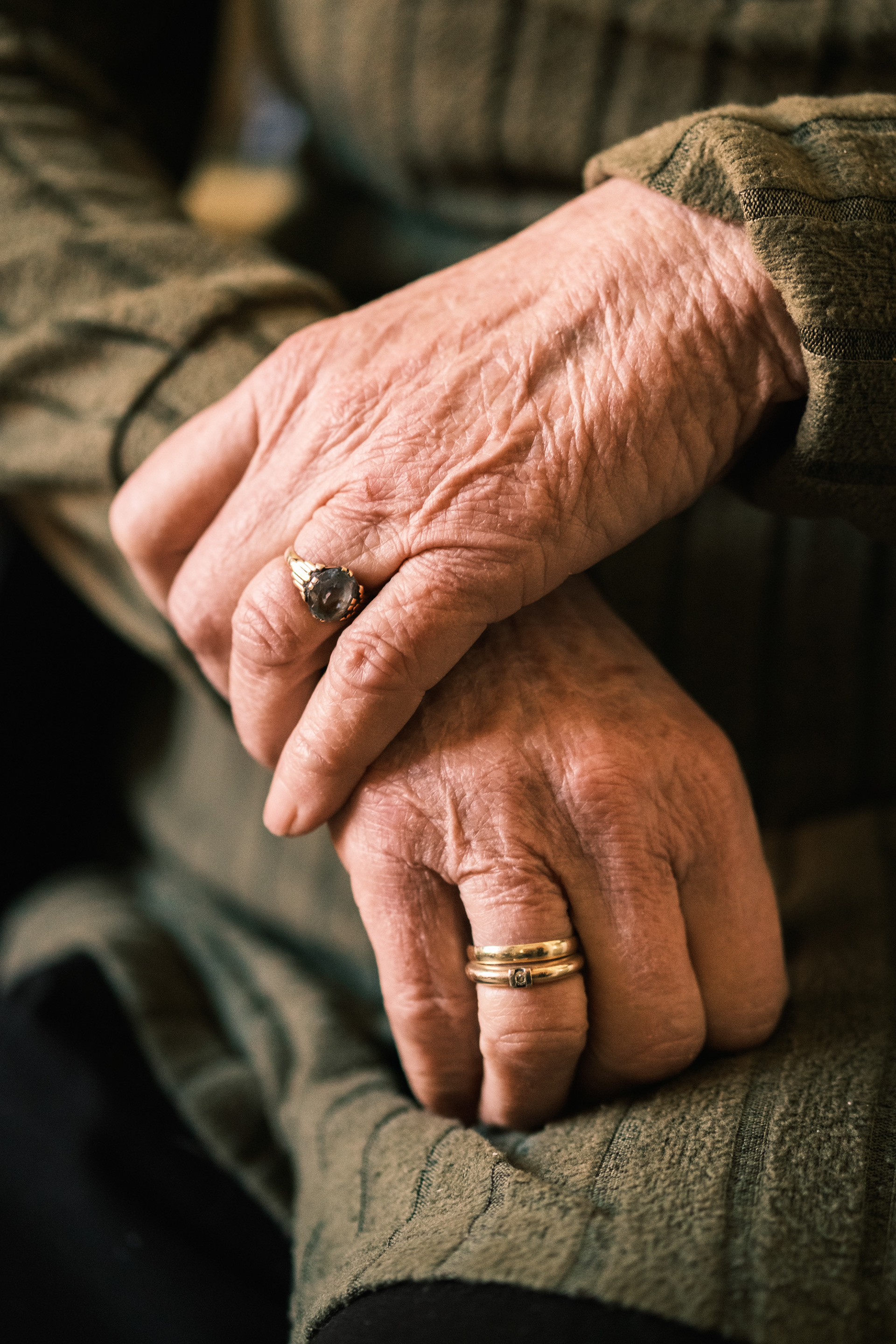
On the one hand, Eva wears a ring with a large stone that belonged to her grandmother. On the other, she wears two wedding rings: one from her first marriage and one from her last—her marriage to John.
After running their tavern for a few more years, Eva needed a change. She began working as a groundworks laborer. In 2008, on a rainy day, she slipped in the mud and a motorized wheelbarrow fell on top of her. Her right leg was crushed and later amputated. She received a disability pension, but soon felt she lacked purpose. She then took a kitchen job at a local tavern, where she spent nine years.
By chance, she later had the opportunity to purchase Bykroen, a small tavern in Randers. Since then, she has run it almost single-handedly from her wheelchair. At the back of the tavern, an old, steep staircase leads up to Eva’s home, just above the bar.
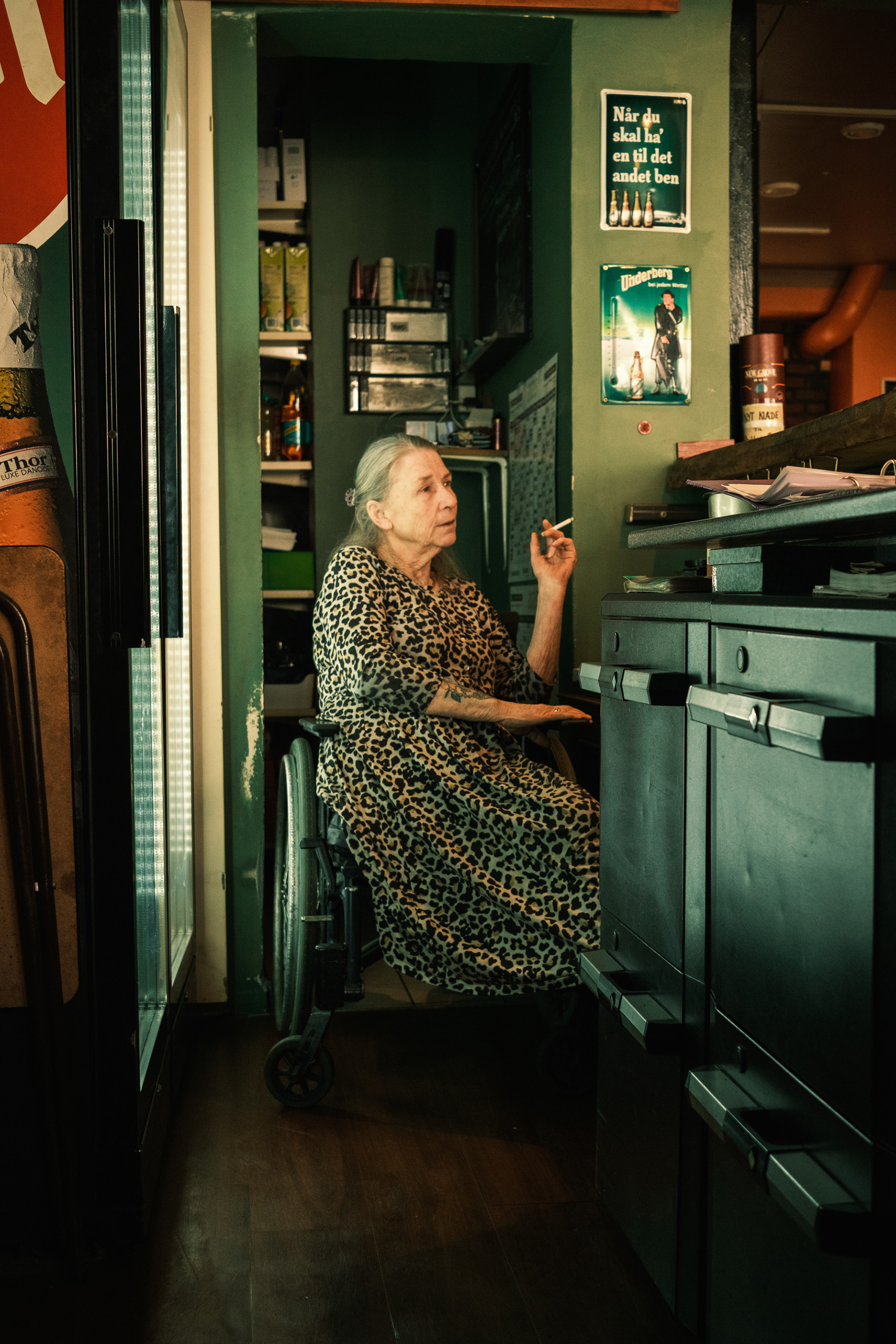
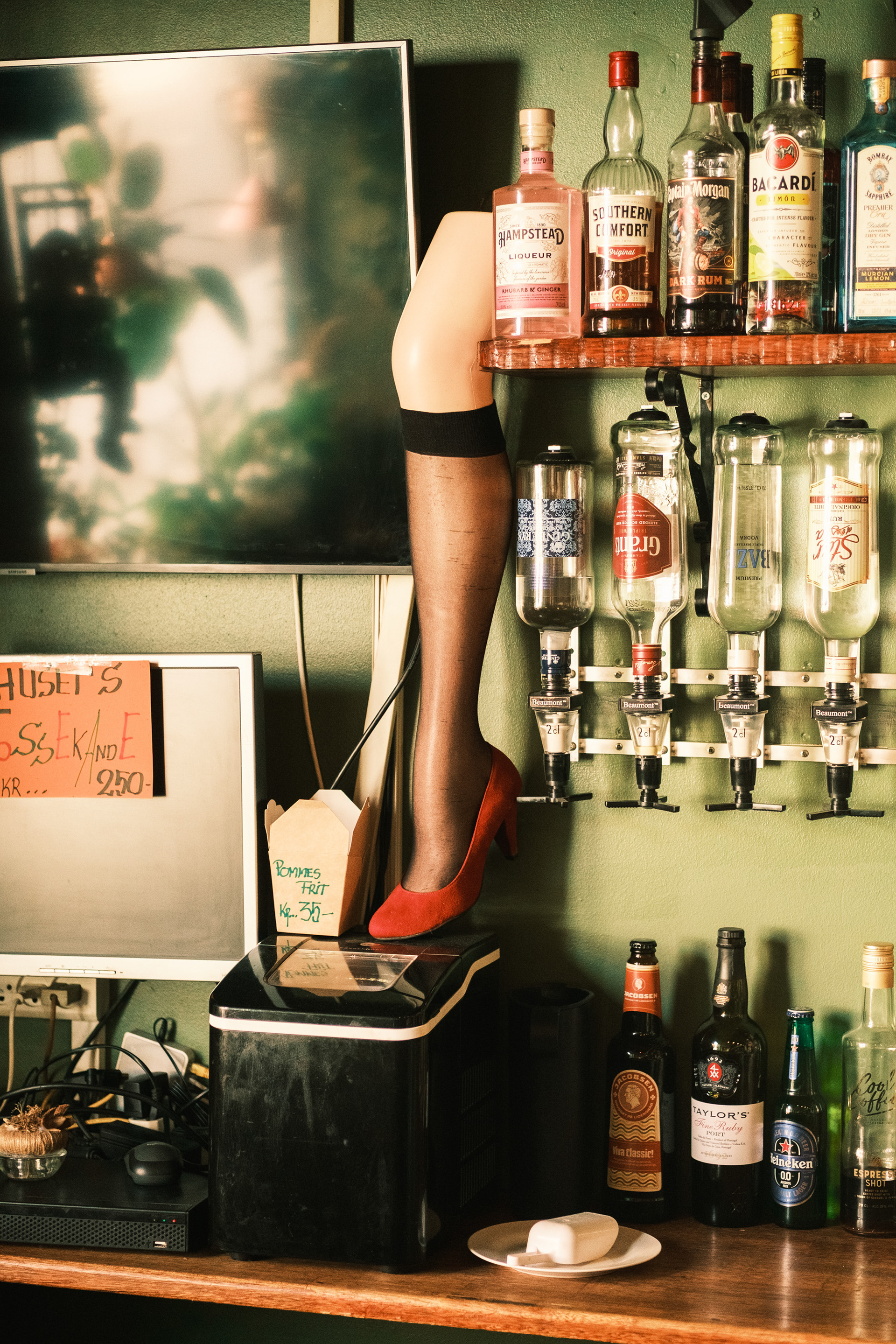
Eva now seldom leaves the red-brick building in Randers—not because of loneliness, introversion, or having only one leg, but because its two stories hold her work life, social life, and private life, along with memories of loss, perseverance, and growth. Each morning, seven days a week, she wheels to the stairwell, grips the railing, and hops down the narrow steps on her left leg to the wheelchair waiting below.
For the next 16 hours, she serves drinks, prepares food, and talks with guests about everything from personal problems to shared memories. When the last guest leaves, she climbs back up the stairs—one step at a time—toward the quiet of her bedroom, her sacred place to rest before another long day behind the counter.
“This is where my story will end. I can feel it. It’s the right thing for me, and I can’t take it anymore. No more moving around. And I actually think I’d like to make this my final home. That’s why I painted my walls green.”