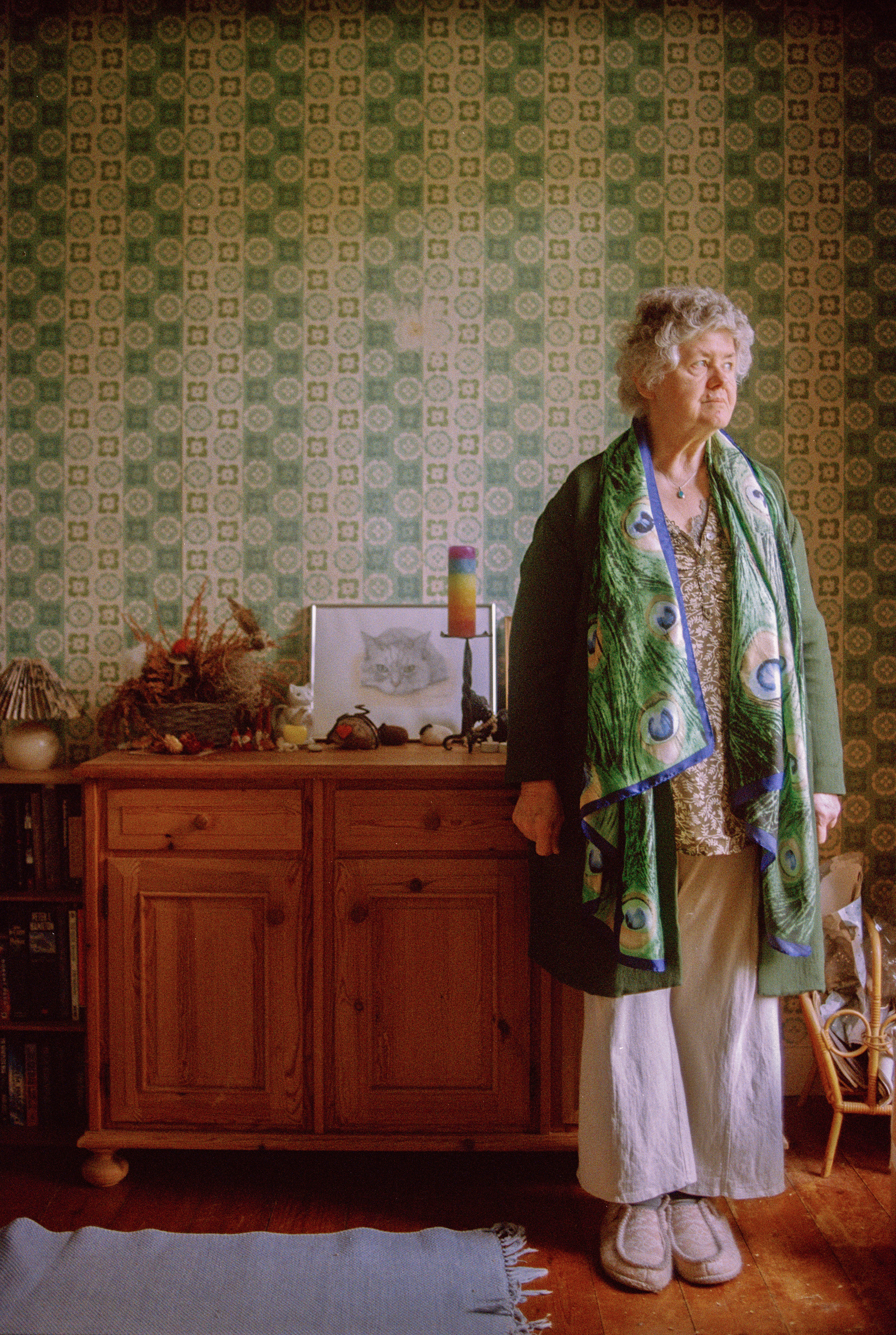
Under the same stars she once saw from her childhood home in Østerbro, Eva lives closely connected to the surrounding landscape. Chronically ill, yet hopeful about life — and about what may come after it.
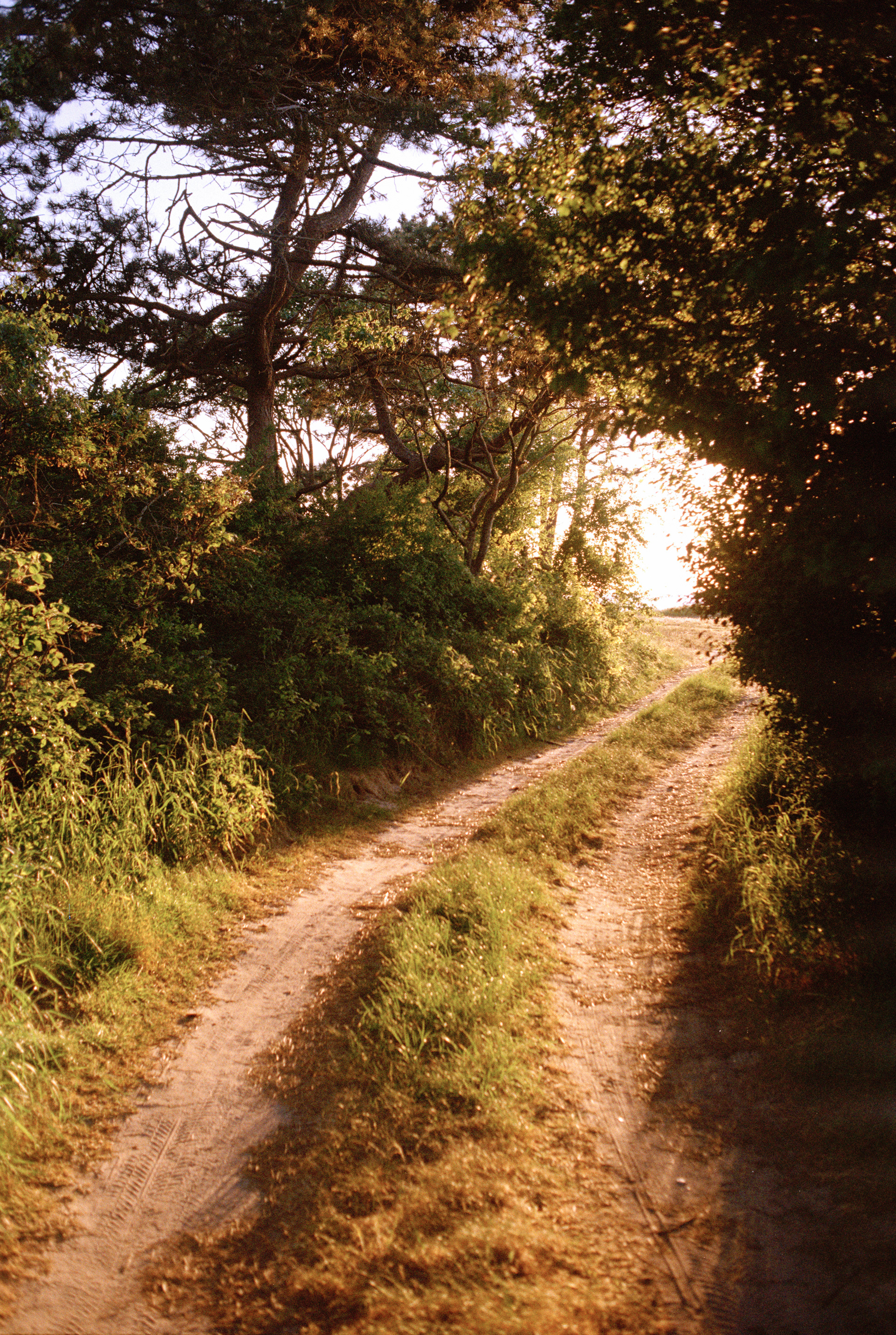
The old half-timbered houses gradually grew smaller behind Eva as she moved away from Nordby’s main street. It was afternoon, and she was out walking along the dirt roads that weave the cultivated island like a net. A few years earlier, she had undergone cancer treatment, and recently some unusual pains had stirred uneasy thoughts. But the symptoms had raised no concern at the oncology department, and Eva tried to brush them aside and return to her everyday routines.
Until that afternoon, half a kilometer from her front door, when she suddenly noticed the silhouette of a large bird perched in a tree. As she drew closer, she realized it was a vulture. The bird opened its beak and let out a sharp, warning hiss — a sound that sent Eva straight home and prompted her to insist on a scan.
The scan confirmed the cancer had returned, having now reached her bones.
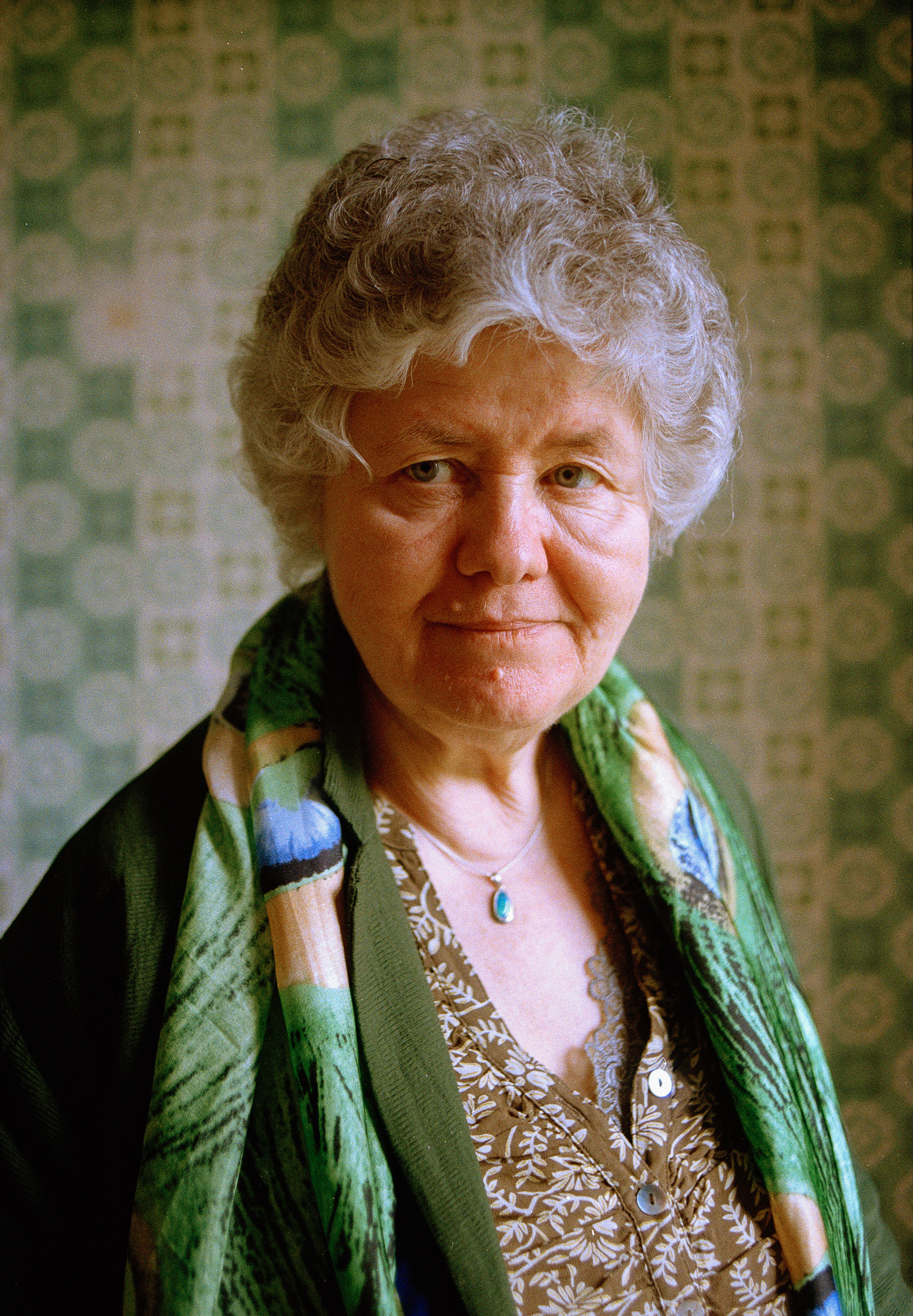
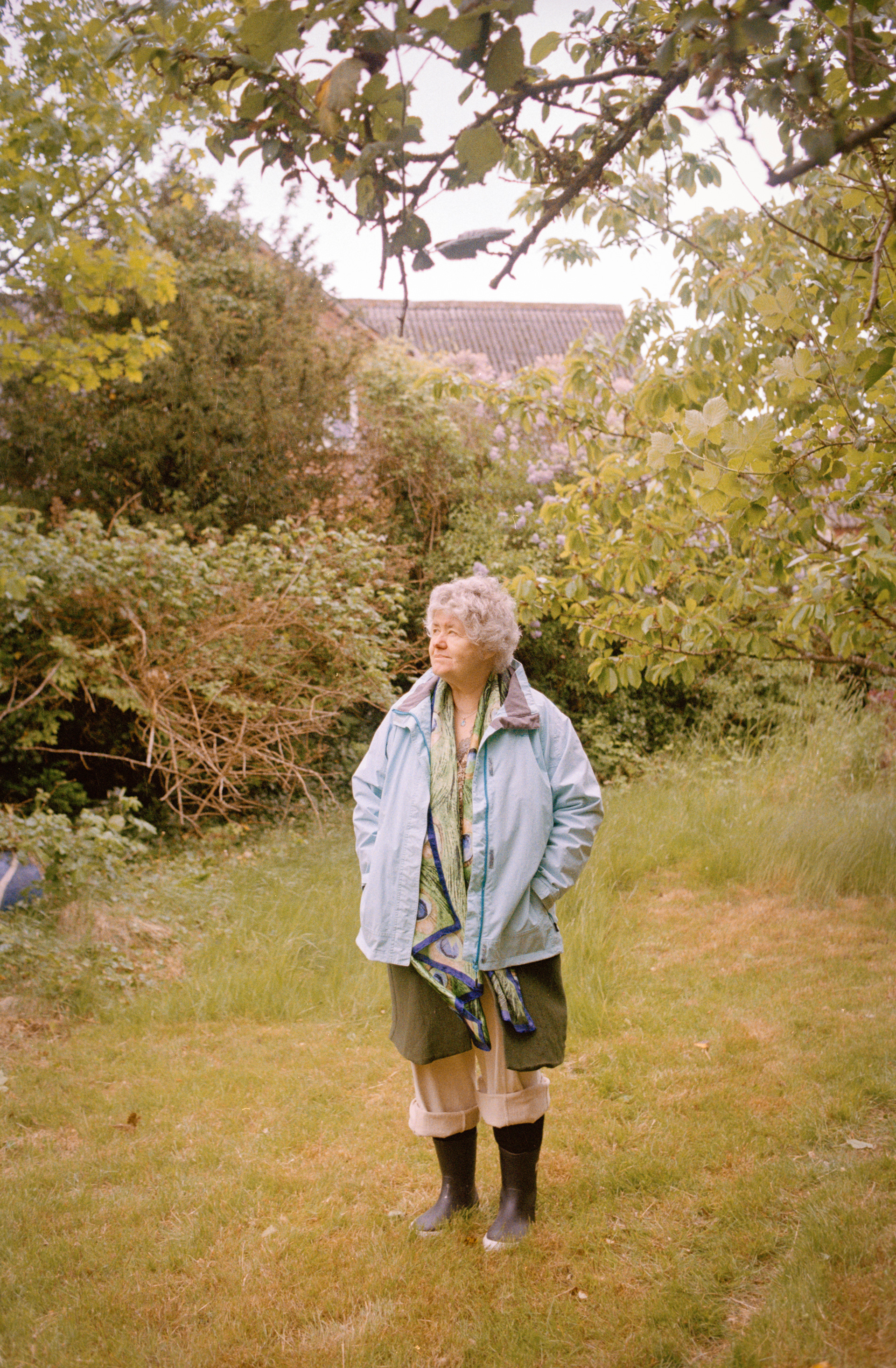
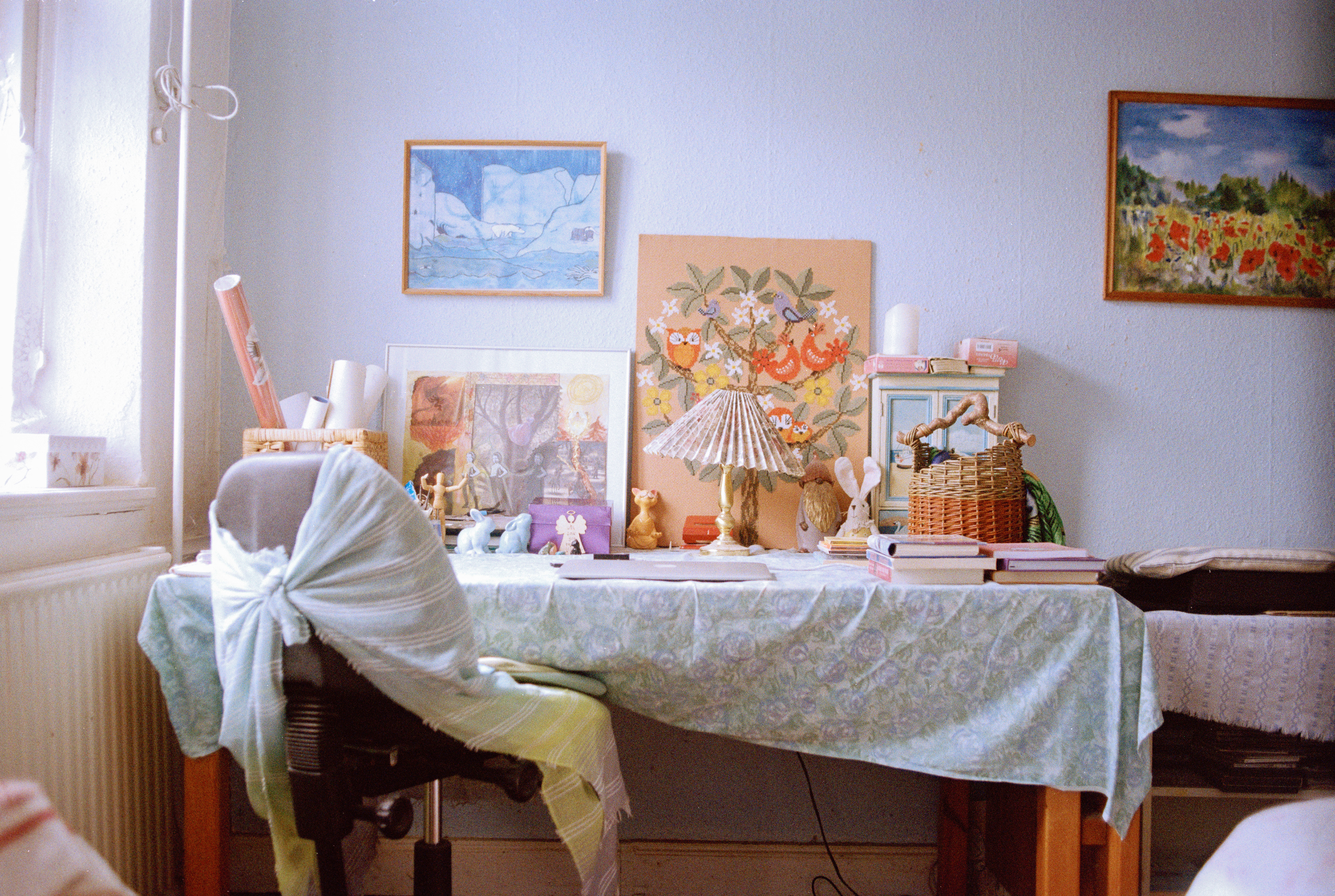
Eva Kemp, now 70, has lived on Samsø for the past twelve years with her three cats and her life partner of 50 years, Jonathan. She grew up by the water in Østerbro, Copenhagen, and spent most of her adult life on Zealand. Most recently, she and Jonathan lived for 17 years in a collective in central Zealand, before trading shared fields and communal living for the island landscape and a 147-year-old brick house.
Slowly, Eva became part of the island community. She joined the church choir and found work at the island’s care home, where she spent the final eight years of her 36-year career in elder care. The job became an important anchor in her life. She formed close relationships with the residents, who opened her eyes to northern Samsø and its distinctive natural surroundings.
In 2019, Eva was diagnosed with cancer for the first time. A few years into her illness, Jonathan suffered a blood clot that nearly claimed his life. Yet the couple drew strength from one another and from the nature that continued to surround them. They kept their spirits up, and after surgery Eva returned to work, where she remained until retiring three years ago.
“There is no chance of recovery or of entering a good phase if you’ve already decided how your story will end. It is crucial to keep the field open — in every aspect of life.”
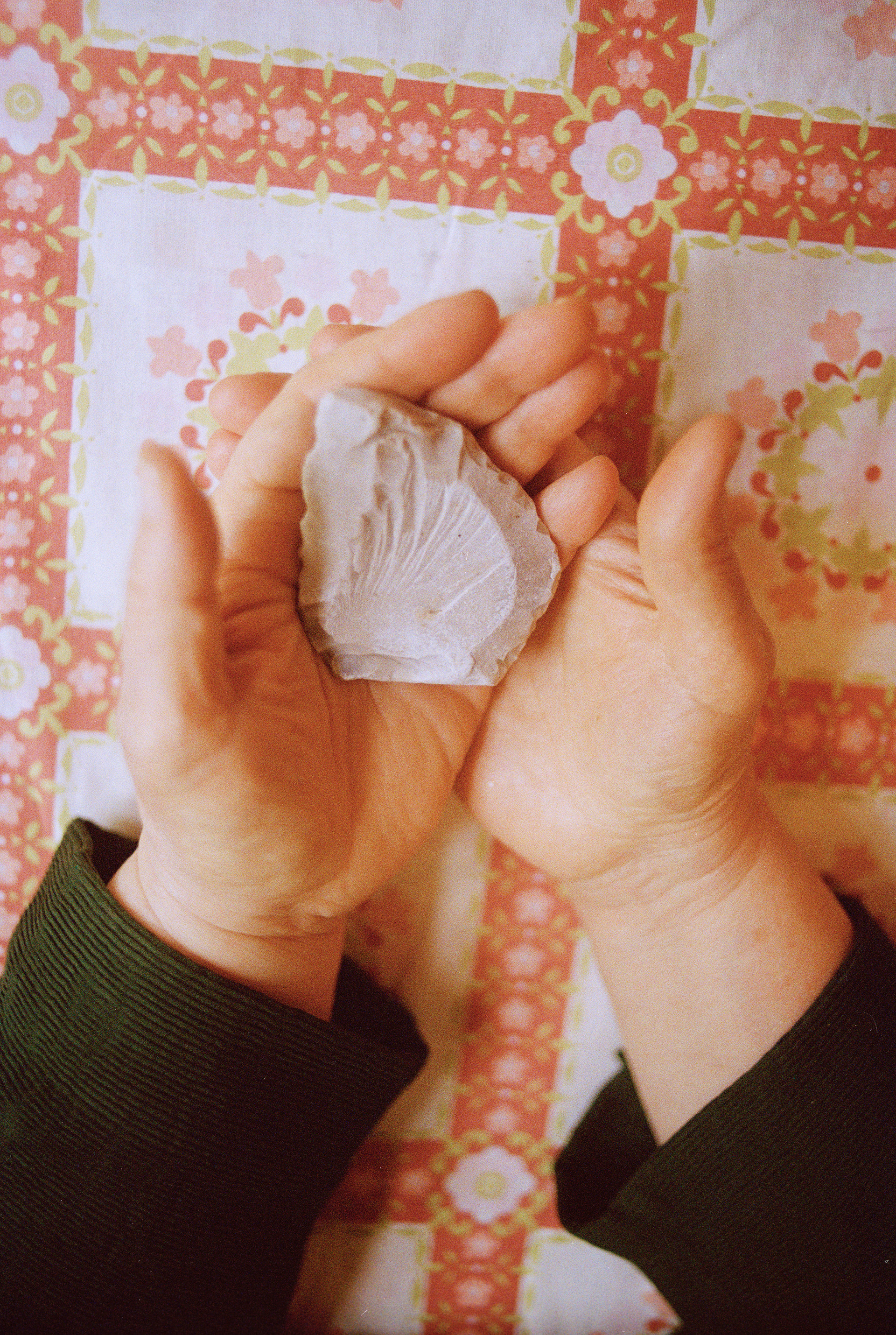
Shortly after moving to Samsø, Eva found a rock with what looked like the imprint of an angel’s wing. The rock became a symbol of freedom and hope, and it has sat in her kitchen window ever since.
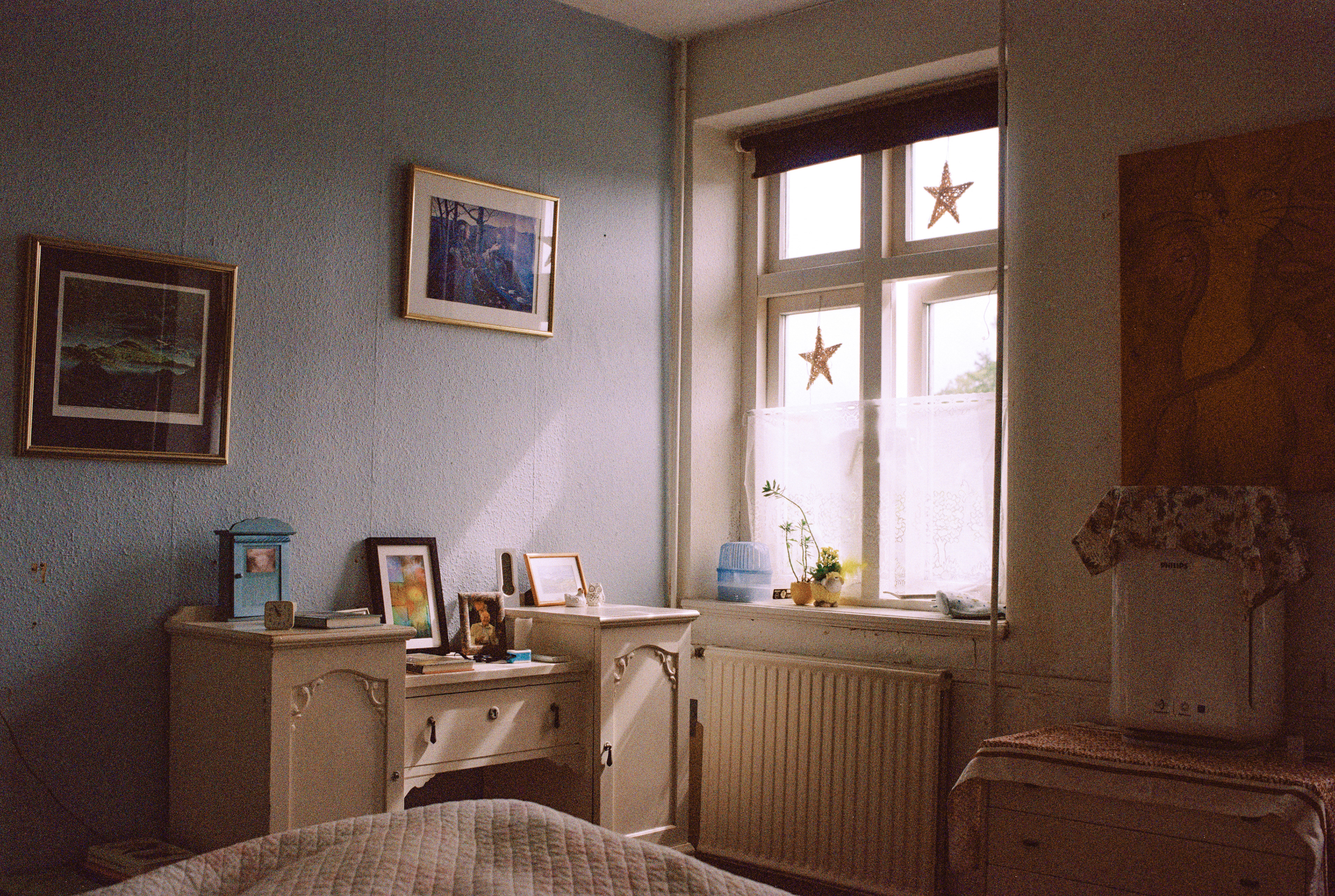
Five years ago, Eva was diagnosed with breast cancer for the second time. This time, the cancer was no longer curable. The treatment cost Eva one of her breasts as well as her once long, red hair. But Eva embraces the physical changes, which have become a reminder not of sickness but of life.
“Why not honor those scars and imperfections? My femininity is neither in my breast nor in my hair. It truly isn’t.”
She compares her body to the Japanese art of kintsugi, in which broken ceramics are repaired with lacquer mixed with gold, turning cracks into part of the object’s history and giving it renewed life. For Eva, wear and damage are marks of honor — not flaws to hide or grieve.
Since turning 70 last year, Eva has had three scans, none of which have shown any progression of the cancer. Despite feeling well and refusing to anticipate the worst, she knows that nothing is guaranteed, and that the next scan could tell a different story.
“I am not thrilled by the thought of Death following me, holding my hand. Death does that. Death used to stay up in the mountains, where I could wave to Him from a distance. Now He wants to hold my hand, sit on my lap. Will You please stop? I am not ready to die. I really am not.”
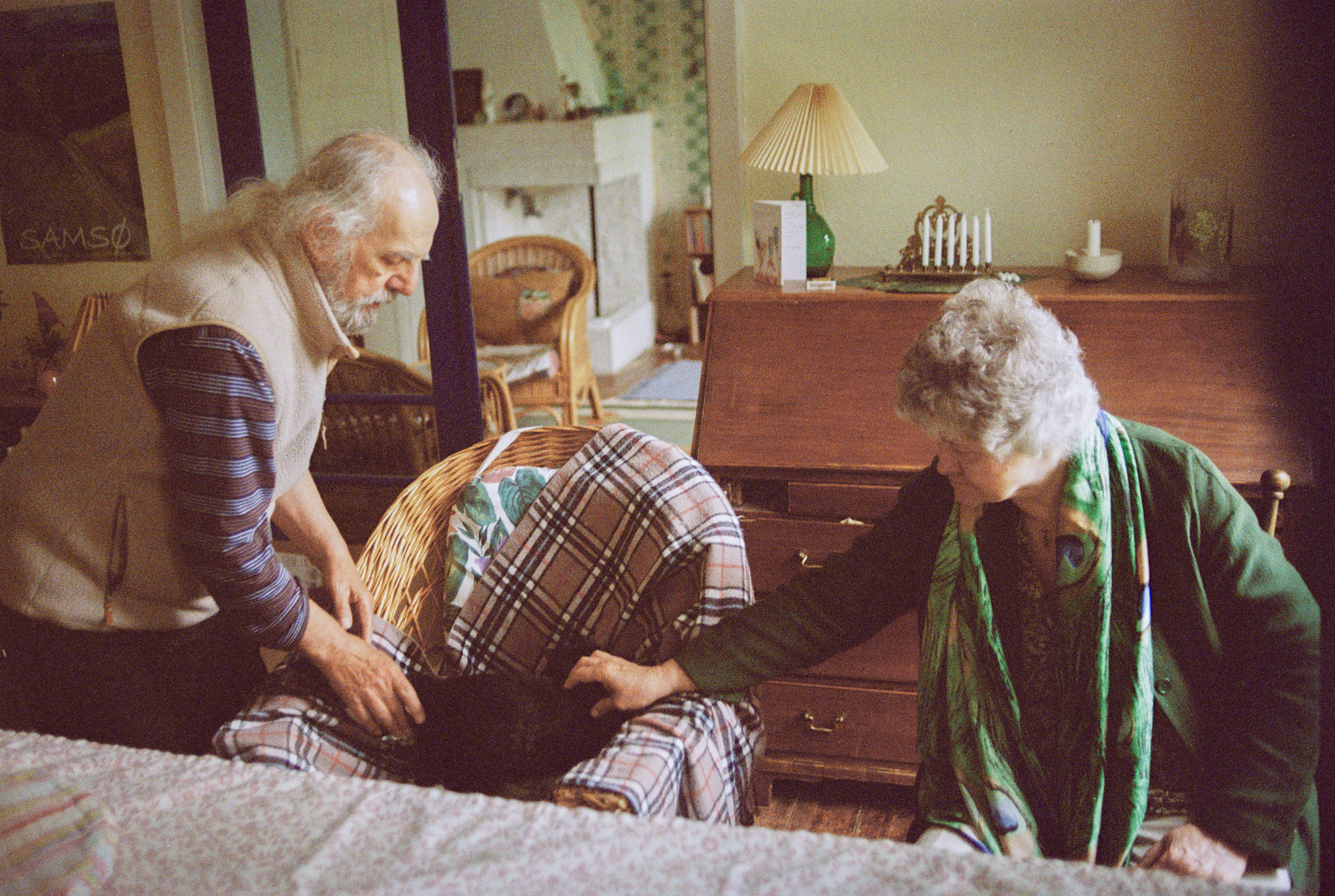
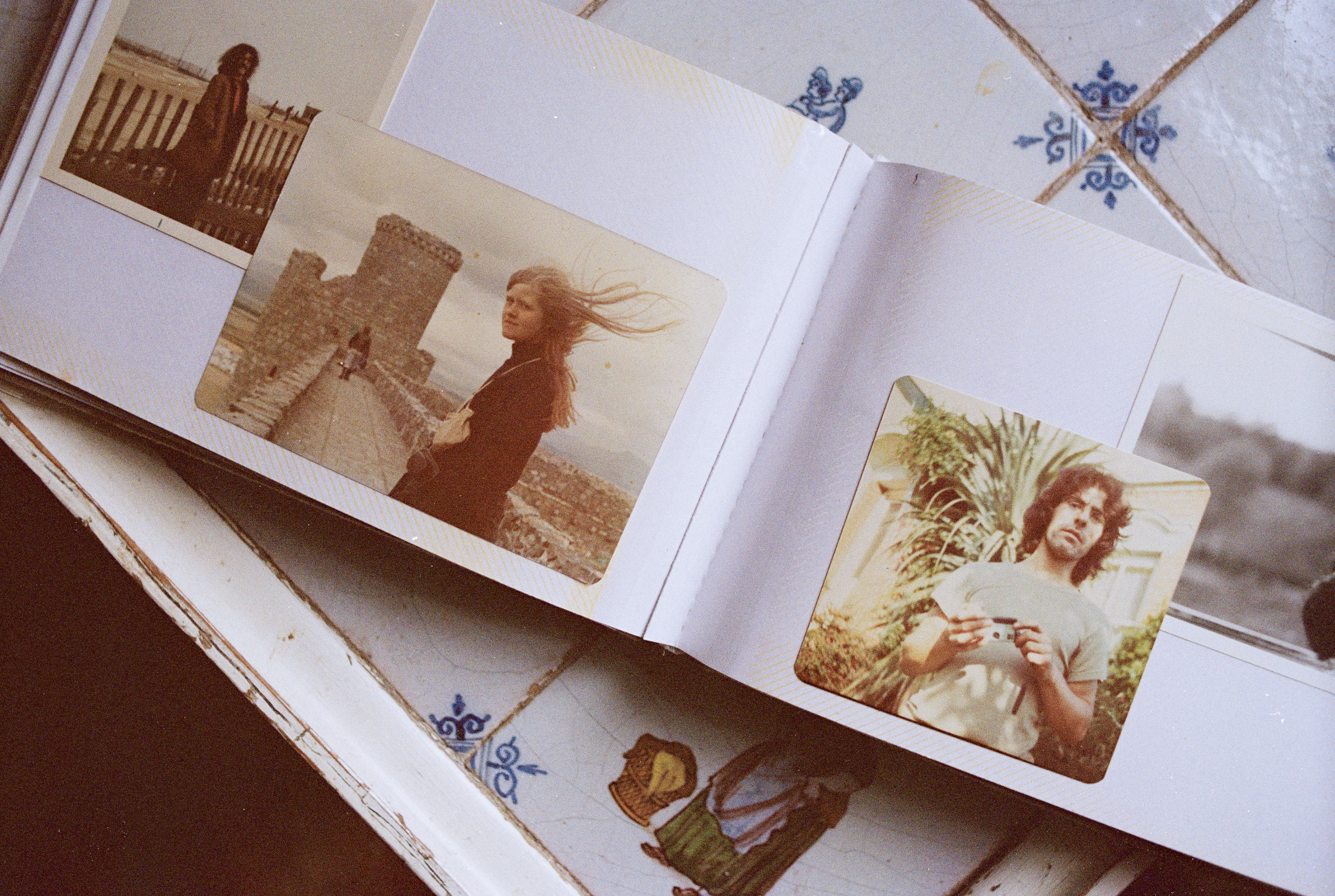
Eva has always felt deeply connected to nature. It gives her a sense of life and reminds her that she is never truly alone. When she was 16, she lost her mother, father, aunt, and grandmother within just four years. During that time, she would go into the forest and hug the trees, seeking comfort.
“You are never alone in nature. Nature is alive. It welcomes you without judgment. Nature is ever-present, like the stars. Whatever happens, it will always rise.”
On Samsø, far from the light pollution of the cities, the night sky remains clear — much as it was above the collective in rural central Zealand. During meteor showers, Eva and Jonathan step outside and count the fleeting streaks of light passing over Nordby.
“When I cycled home from work back then, I had to ride through a forest. It was almost like passing through Orion’s gate. Orion was always right there above you. You can see it from here too. There’s something comforting about that. I find it comforting that those who still live on Zealand can see Orion as well. Somehow, it feels like we’re all in the same boat.”
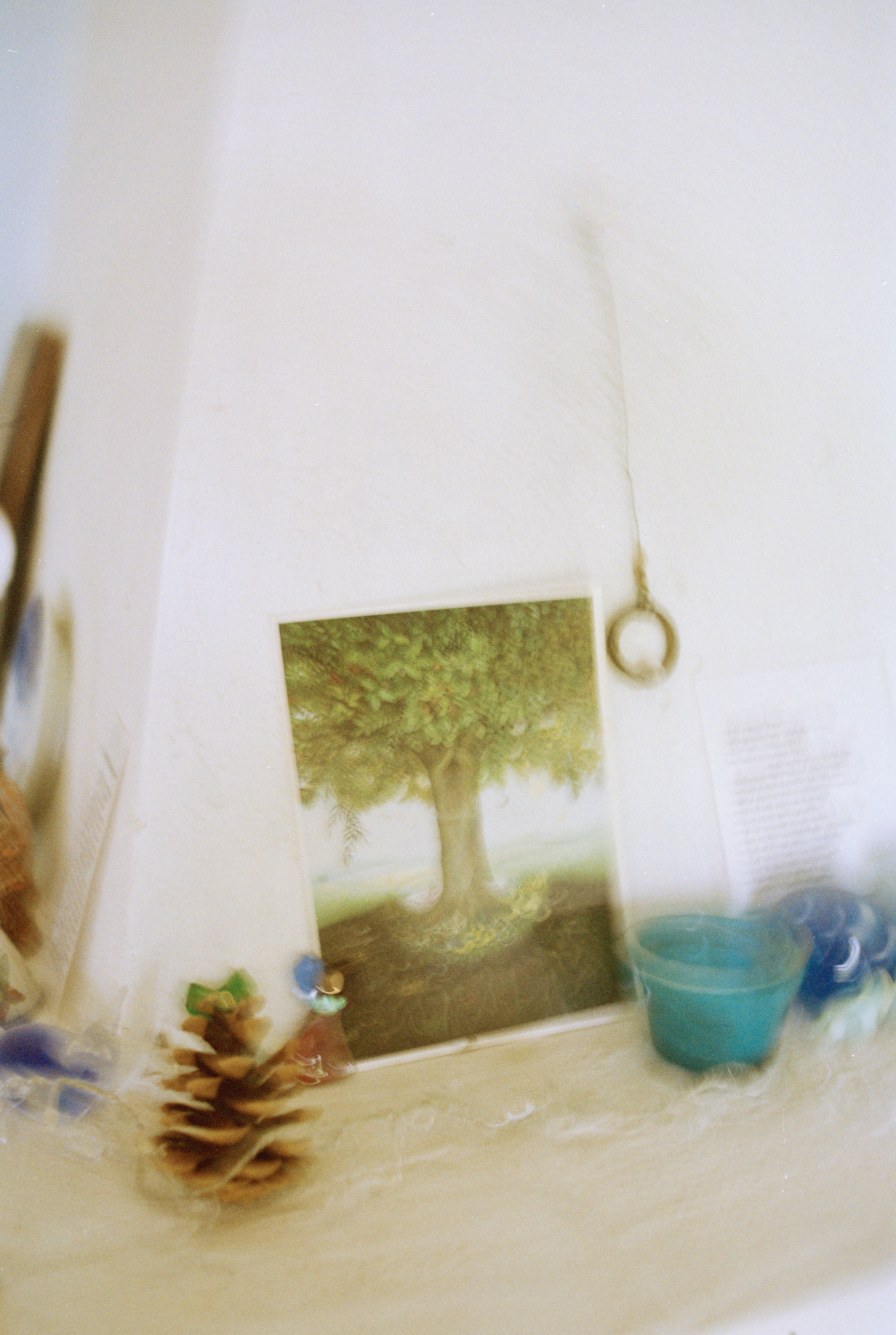
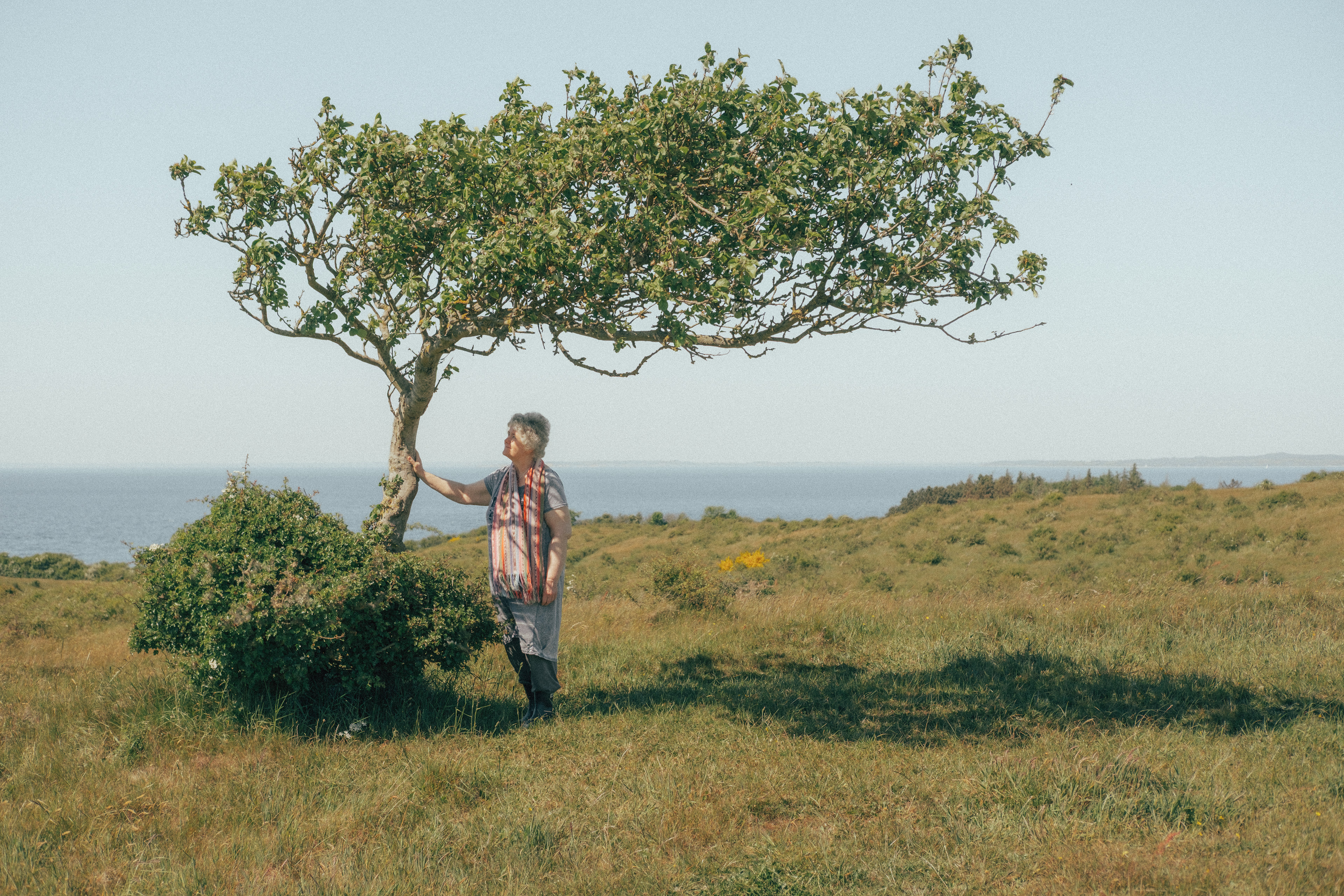
On a hill in Langdalen, near Nordby Bakker and not far from Eva’s home, a lone tree leans over the wild grass, casting the only shadow in the area. At first glance, it appears solitary, cut off from the surrounding woodland. But beneath the ground, its roots branch out and intertwine with the other trees, anchoring it through every kind of weather.
It’s Eva’s tree. This is where she goes whenever she feels the need to connect with nature and its energies.
“It’s about being able to connect with something that is alive and carries an indomitable life force. It makes me believe more in life. It gives me hope.”
Eva is not done with life. But once her final chapter is written, she imagines this very spot on the hilltop as her resting place — beneath the tree, lit by Orion, and surrounded by the sea.
“Here I would rest with someone, or something, I know very well. Then Jonathan could come visit me. I think he would like it too.”